Ciso Tool Ciso Tool

How to Fix Loose Custom Watch Hands on a Pinion?

Time:2026-10-09 Author:Sienna
0%

Loose custom watch hands can turn a precise timepiece into a frustrating repair project. A hand may wobble, slip during setting, or touch the dial and stop the movement. The problem often begins with a small mismatch between the hand tube and the pinion. Dust, repeated handling, incorrect fitting, or a slightly enlarged hand tube can weaken the grip.

This guide explains why do custom watch hands lose their tight fit on the pinion and how to correct the issue carefully. It follows practical watchmaking methods used under magnification, with attention to hand alignment, pinion condition, and safe pressure. A hand-setting tool is strongly preferred over improvised pliers. Even pressure matters. Too much force can bend the hand, mark the dial, or damage the delicate motion works beneath it.

Check the fit before applying any adjustment. The hand should sit firmly without scraping the dial or crystal. If the tube is oversized, gentle correction may help, but replacing the hand is sometimes the more reliable choice. Not every loose hand can be saved.

Small details matter.

An experienced technician will inspect the pinion for wear and confirm that the hand is seated at the correct height. The first attempt may not be perfect. Rechecking the hand clearance after casing the movement is good practice. This article offers a careful, evidence-based approach, while recognizing that unusual custom parts may require professional assessment and specialized tools.
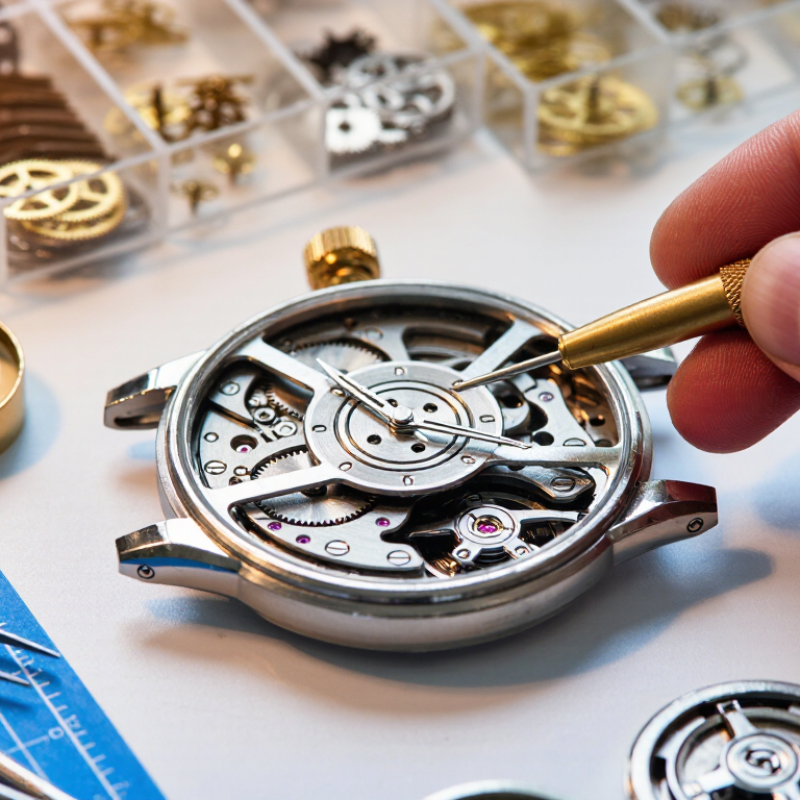
How to Fix Loose Custom Watch Hands on a Pinion?

Identify the Cause of Loose Custom Watch Hands

Loose custom watch hands usually point to a poor fit between the hand tube and the pinion. The hand may look correctly installed, yet it can wobble when the movement changes position. Measure the pinion diameter and the hand tube opening with suitable tools. Even a tiny difference can cause slipping. Inspect the tube under magnification. It may be oval, cracked, stretched, or filled with old lubricant.

Shock is another possible cause. A light impact can shift the minute hand while leaving the dial and crystal untouched. Incorrect hand-setting pressure can also enlarge the tube. Dirt matters more than many people expect. A small fiber inside the tube may prevent full seating. Do not use household glue. It can spread, stain the dial, and make future servicing difficult. The safer repair may involve replacing the hand, carefully reducing the tube, or fitting a correctly sized hand. The best choice depends on the movement and hand material.

Tips: Remove the hands before testing the pinion. Check for side play, not only vertical movement. Use a hand-fitting tool and apply even pressure. Turn the movement slowly after installation. Watch for rubbing between the hands and dial. If the cause remains unclear, ask a qualified watch technician to inspect it. Guessing can worsen the fit. I have seen small adjustments fail when the original pinion was already worn, so the pinion itself must not be ignored.

How to Fix Loose Custom Watch Hands on a Pinion?

Identify the Cause of Loose Custom Watch Hands

How to read the chart: A loose hand usually results from an incorrect hand-tube fit, deformation, contamination, or damage to the pinion. Inspect the hand tube and pinion first, then clean the contact surfaces. If the hand tube is oversized or damaged, replace it or adjust it with a suitable professional hand-fitting tool. Never force the hand onto the pinion, because excessive pressure can bend the hand or damage the movement.

Prepare the Watch and Required Repair Tools

How to Fix Loose Custom Watch Hands on a Pinion?

Prepare the watch on a clean, stable work surface before touching the hands. A movement holder prevents accidental pressure on the balance assembly. Use a 3x to 5x loupe, hand removers, hand-setting tools, pegwood, a dust blower, and finger cots. Keep each tool free from oil and metal particles. The Federation of the Swiss Watch Industry reported Swiss watch exports of CHF 26.7 billion in 2023. This figure reflects a large service ecosystem, where careful preparation protects valuable mechanical work. Remove the case back carefully, then stop the movement if the design permits it. Do not force the crown. Confirm the hand stack and inspect the pinion under magnification. A loose hand may come from an oversized cannon opening, a bent hand tube, or damaged friction surfaces.

Tips: Place removed hands on a labeled sheet. Never grip them with tweezers. Use hand levers with protective film beneath them. A setting tool should contact the hand’s center tube, not its painted surface. Press gently and check alignment at twelve, three, six, and nine o’clock. The hand should hold firmly without scraping another hand or the dial. I sometimes recheck clearance twice, because visual alignment can look correct while the hand still sits too high. That small mistake can return later as a stopped movement. Avoid improvising with household tools. Their edges are rarely precise enough for a delicate pinion.

How to Fix Loose Custom Watch Hands on a Pinion? - Prepare the Watch and Required Repair Tools

Preparation or Tool Recommended Specification Purpose How to Use It Safely Priority
Clean work surface Flat, bright, and free from lint; use a soft, light-colored mat Prevents small hands, screws, and springs from being lost or contaminated Keep food, liquids, metal filings, and loose fabric away from the work area Essential
Protective case holder Padded holder sized to support the watch case without covering the dial Stabilizes the watch while the loose hand is inspected or refitted Support the case evenly; do not press on the crystal, crown, or pushers Essential
Case-opening tool Tool matched to the case-back type: snap, screw-down, or screw-held Provides access to the movement and hand-setting mechanism when required Confirm the opening method first and keep the tool square to the case back Required if access is needed
Hand-removal levers Matched pair with broad, smooth tips and protective dial covers Lifts a loose hand from the pinion without prying directly against the dial Use equal pressure on both sides and protect the dial with thin plastic film Essential for removal
Hand-setting press Interchangeable hollow tips that contact the hand boss, not the hand surface Seats the hand evenly on the pinion and reduces bending or dial contact Select a tip slightly larger than the hand tube and press vertically with light force Essential for refitting
Fine-point tweezers Non-magnetic, polished tips suitable for handling small watch components Positions the hand and handles protective covers or small parts Grip the hand near its center hub; avoid squeezing the thin hand body Essential
Loupe or inspection microscope Approximately 3× to 5× magnification for general inspection Reveals a split hand tube, damaged pinion, bent hand, or contamination Inspect the hand, pinion, dial clearance, and alignment before applying pressure Strongly recommended
Rodico-style cleaning putty Clean, residue-free putty intended for delicate watch components Removes dust and fingerprints from the dial and hands Touch lightly; do not drag it across printed markings or luminous material Recommended
Dust blower Manual rubber blower; avoid compressed air from a powered canister Removes loose dust before the case is closed Blow across the surface from a short distance; never touch the nozzle to the movement Recommended
Finger cots or nitrile gloves Powder-free, lint-free hand protection Prevents oils and moisture from transferring to the dial or hands Change or clean protection if it becomes dusty or contaminated Recommended
Movement support and hand-setting position Movement held securely; hands set at a clear reference position Makes hand alignment and clearance checks more consistent Set the hands according to the movement’s service procedure; avoid forcing the gear train Essential
Final clearance check Hands must remain parallel, rotate freely, and clear one another and the dial Confirms that the repair has not created friction or misalignment Turn the hands through a complete cycle and check that the loose hand no longer slips Essential
Safety note: If the hand tube or pinion is visibly damaged, the hand continues to slip after correct seating, or the movement is not securely supported, stop the repair and have the watch inspected by a qualified watchmaker.

Remove the Hands Without Damaging the Dial

How to Fix Loose Custom Watch Hands on a Pinion?

Remove the hands before inspecting the pinion or tightening anything. A careless lift can scratch the dial, bend the hand tube, or disturb printed markers. Set the hands to twelve o’clock first. This position makes alignment easier during reassembly. Stop the movement and remove the case back if necessary. Work under bright, diffused light. Use a loupe, dust blower, and plastic dial protector. Never place bare metal directly against the dial.

Cover the dial with a thin protective sheet, leaving only the hand stack exposed. Slide a proper hand remover beneath the hour and minute hands. Keep its feet flat and parallel. Apply slow, even pressure upward. Do not twist. Remove the seconds hand separately when its design allows it. A sharp tool or household knife is risky. I once underestimated a tight hand and left a faint mark near the center. That mistake was avoidable. Patience matters more than force.

After removal, inspect the pinion and each hand tube for wear, cracks, or distortion. A loose hand may need careful replacement rather than extra pressure. Clean dust with air, not fingers. When reinstalling, align the hour hand first, then the minute hand, and check clearance through a full rotation. The hands should sit firmly without touching each other or the dial. If resistance feels unusual, stop and reassess. Small errors become visible quickly.

Secure the Hands Correctly on the Pinion

Loose Custom Watch Hands on a Pinion

Loose custom watch hands usually indicate poor friction on the pinion, not a defective dial. Secure the hands correctly by checking their fit before pressing them into place. Under magnification, inspect the hand tubes for distortion, cracks, or excess clearance. A hand that drops freely onto the post is too loose. Do not compensate with glue. Adhesive can stain the dial and interfere with servicing.

Use a movement holder, hand-setting press, loupe, and clean finger cots. Set the hour hand first, aligning it with twelve o’clock. Press straight down with controlled pressure. The hand should sit level and clear the dial. Fit the minute hand next, keeping it parallel to the hour hand.

Check the clearance between both hands, the dial, and the crystal. Even a slight bend can create rubbing during rotation. It should move freely.

The seconds hand needs extra care.

Its tube is tiny and easily crushed. Support the movement firmly, then apply pressure only over the pinion’s center. Never press against a jewel or nearby wheel. Rotate the hands through twelve hours and watch for contact.

I sometimes recheck the alignment after this test, because a hand can look secure but still lift slightly. That small error is easy to miss. If friction remains inconsistent, replace the hand or consult a qualified watch technician.

A clean fit is safer than a forced one.

Reassemble the Watch and Test Hand Alignment

How to Fix Loose Custom Watch Hands on a Pinion?

Reassemble the watch carefully after securing the loose hands. Keep the movement in a stable holder, and use finger cots to avoid fingerprints. Check that the hour hand sits fully on the hour wheel without touching the dial. The minute hand should clear the hour hand through a complete rotation. Press each hand gently with a hand-setting tool. Never force it. Excessive pressure can bend the pinion or damage the wheel train.

Test the alignment before closing the case. Set both hands to twelve o’clock, then turn the crown slowly through twelve hours. Watch the hand tips near every hour marker. They should remain parallel and keep an even gap from the dial. I also check the hands at three, six, nine, and twelve. Small errors become obvious there. If the minute hand reaches twelve while the hour hand sits slightly early, remove and reset the hands. Do not correct it by twisting the hand sideways.

Reinstall the dial, case components, and crystal with clean tools. Then test the setting mechanism again. Rotate the crown forward and backward, listening for scraping or uneven resistance. I once accepted a tiny misalignment because it looked harmless under magnification. It was noticeable on the wrist. Recheck the hands after several hours of running, since a loose fit may return when the movement experiences normal shock.

FAQS

What tools are needed to fix loose watch hands?

Use a clean work surface, movement holder, 3x–5x loupe, hand removers, and setting tools. Keep pegwood, a dust blower, and finger cots nearby. Keep every tool free from oil and metal particles.

Why does a custom watch hand become loose?

Common causes include an oversized cannon opening, bent hand tube, or damaged friction surfaces. Inspect the pinion and hand tube under magnification. A hand that drops freely is too loose.

How should I remove the hands safely?

Place protective film over the dial before using hand levers. Never grip the hands with tweezers. Label each removed hand on a sheet. Stop the movement if the design allows it.

How should I install the hour and minute hands?

Set the hour hand first and align it with twelve o’clock. Press straight down with controlled pressure. Install the minute hand next, keeping it parallel. The hands should sit level and move freely.

How can I install the seconds hand without damaging it?

Support the movement firmly before pressing the seconds hand. Apply pressure only over the pinion’s center. Never press against a jewel or nearby wheel. The tube is tiny and easily crushed.

Can glue secure a loose watch hand?

Do not use glue. Adhesive can stain the dial and complicate future servicing. Replace the hand or seek qualified technical help when friction remains poor.

How do I check whether the hands are aligned correctly?

Check alignment at twelve, three, six, and nine o’clock. Rotate the hands through twelve hours. Watch for contact with the dial, crystal, or another hand. A quick visual check can mislead.

What should I do if the hand still lifts or rubs?

Remove it and inspect the tube again under magnification. A slight bend may cause rubbing during rotation. I sometimes recheck clearance twice, because small errors are easy to miss. Do not force the fit.

Conclusion

Loose custom watch hands can affect timekeeping, readability, and the overall appearance of a watch. Understanding why do custom watch hands lose their tight fit on the pinion is the first step toward a reliable repair. Common causes include repeated vibration, incorrect hand installation, worn or mismatched hand tubes, and excessive pressure during previous adjustments. Before beginning, prepare a clean, well-lit workspace and suitable tools, such as hand levers, protective dial covers, fine tweezers, and a movement holder. Securing the watch and protecting the dial helps prevent scratches and accidental movement damage.

The hands should be removed carefully and evenly, avoiding contact with the dial surface or nearby components. Once removed, inspect the pinion and hand tubes for looseness, distortion, or debris. The hands must be seated straight and pressed down with controlled, even pressure so they grip the pinion without rubbing against one another or the dial. After reassembling the watch, rotate the hands through a full cycle and check their alignment at key hour positions. A final timing and clearance check confirms that the repair is secure and the hands move smoothly.

Sienna

Sienna

Sienna is a skilled marketing professional with a deep expertise in our company’s core products and services. With a passion for innovation and detail, she plays a pivotal role in crafting insightful blog posts that not only highlight the unique features of our offerings but also provide valuable......