Estimating titanium watch case production lead time requires more than counting machining hours. Buyers often ask, “what is the lead time for mass producing titanium watch cases?” The practical answer depends on design maturity, alloy availability, tooling, machining capacity, surface treatment, inspection, and order volume. A simple three-hand case may move faster than a complex case with deep cavities, thin walls, or integrated lugs. Titanium is strong, lightweight, and difficult to machine. Tool wear can quietly extend the schedule.
Quality expert W. Edwards Deming said, “Quality comes not from inspection, but from the improvement of the production process.” That principle matters here. A factory cannot inspect its way out of poor drawings, unstable fixtures, or late material deliveries. A reliable estimate should separate prototype approval, material preparation, CNC machining, deburring, blasting, polishing, coating, assembly checks, and final inspection. It should also include realistic buffer time. Sometimes, the uncomfortable truth is simple: the first estimate is wrong. A supplier may quote 30 days, then discover that a coating sample fails color comparison under workshop lighting. Another delay may come from a worn cutter or an incomplete tolerance note.
These seven tips examine each stage with practical detail. They help buyers compare supplier promises, identify hidden risks, and build a schedule that reflects actual factory conditions. The goal is not the shortest quoted lead time. It is a dependable production window with fewer surprises.
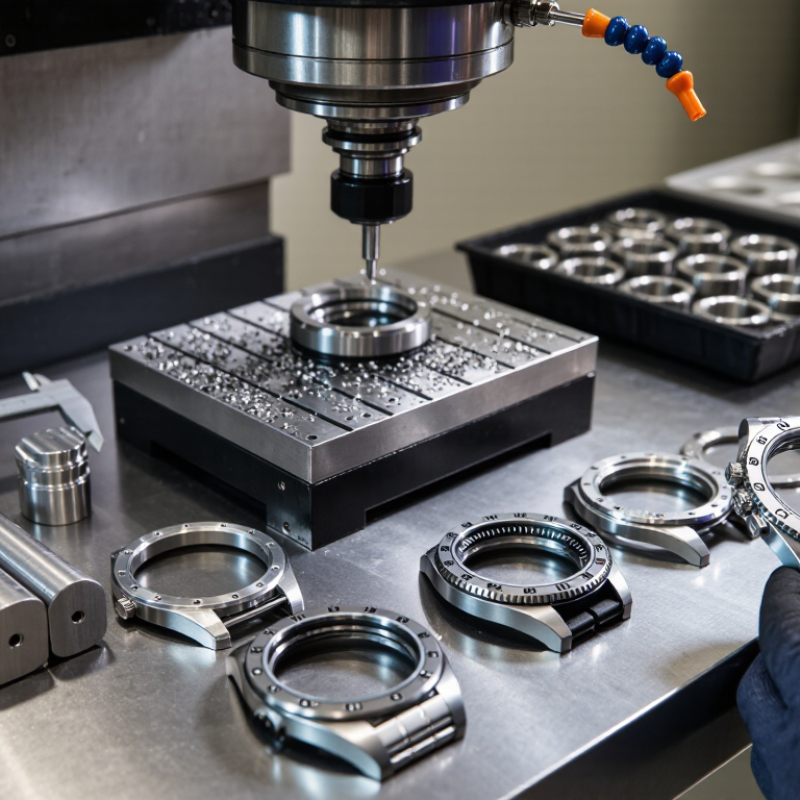
Key Factors That Influence Titanium Watch Case Lead Time
Estimating titanium watch case production lead time requires more than asking for a calendar date. The case design is the first major variable. Deep cavities, thin walls, sharp transitions, and integrated lugs usually require extra CNC passes. Titanium grade also matters. Some grades cut smoothly, while others create heat, tool wear, and slower machining. A practical estimate should include fixture design, programming, raw material availability, and prototype approval. Small details can delay production.
Surface treatment adds another layer. Brushing, polishing, bead blasting, and color treatment may require separate suppliers or repeated inspections. Confirm whether finishing follows machining or partial assembly. Quality requirements also influence timing. Dimensional reports, thread checks, surface inspections, and water-resistance preparation need trained technicians and reliable measuring equipment. The factory’s actual titanium experience matters here. A low hourly quote may hide longer setup times.
Order quantity affects capacity planning. A small trial batch may move quickly, but production quantities can wait for dedicated machines. Ask for a schedule showing engineering review, sampling, machining, finishing, inspection, and packing. Include transport time separately. A realistic lead time often needs a buffer of one to two weeks for rework or material delays. That buffer is not wasted time. It protects the launch plan.
Estimates can still fail.
Share accurate drawings, tolerances, surface samples, and expected quantities before requesting a quotation. Then compare the supplier’s assumptions, not only the final number.
7 Tips to Estimate Titanium Watch Case Production Lead Time
Key factors that influence titanium watch case lead time
The chart shows typical planning ranges in working days for major production factors. These ranges are indicative rather than additive because several activities, such as machining, heat treatment, finishing, and quality inspection, may overlap. Actual lead time depends on design complexity, order quantity, material availability, supplier capacity, and approval speed.
How to Define Production Requirements and Technical Specifications
To estimate titanium watch case lead time, define the product before asking a factory for dates. Specify titanium grade, case dimensions, wall thickness, lug geometry, crown openings, and target weight. Grade 5 titanium is common, but the choice affects cutting speed, tooling, and finishing. Titanium carries heat poorly, so machining often requires conservative feeds and frequent tool checks.
Write tolerances beside every critical feature. For example, define case diameter, gasket grooves, screw holes, and crystal seats separately. State whether dimensions follow ISO 286 tolerance principles. Also identify the required water-resistance level. ISO 22810 covers ordinary water-resistant watches, while ISO 6425 applies to diving watches. These requirements can add pressure testing, rework, and inspection time.
Surface specifications must be measurable. Describe bead-blast roughness, polished zones, color limits, and acceptable marks with samples or photographs. The International Titanium Association identifies aerospace as titanium’s largest major market, showing why material availability and mill scheduling can influence smaller orders. The 2024 Deloitte Swiss Watch Industry Study also highlights supply-chain reliability as a continuing industry concern. Ask for material certificates, CNC capacity, first-article approval, and weekly output. Add separate days for programming, raw material sourcing, trial machining, finishing, testing, and corrective work. A simple estimate is often incomplete. I have seen “30 days” exclude sample approval and inspection. That mistake changes the real delivery date.
How to Break Down Each Stage of the Manufacturing Process
7 Tips to Estimate Titanium Watch Case Production Lead Time
How to Break Down Each Stage of the Manufacturing Process
Tip 1: Separate quoting from production. Allow one to three working days for drawings, tolerances, and manufacturability checks. Tip 2: Confirm titanium grade early. Material availability can add one to four weeks, especially for small orders. The USGS Mineral Commodity Summaries 2024 identifies titanium sponge as a globally traded material with concentrated production sources. That concentration can create unexpected delays.
Tip 3: Estimate CNC machining by geometry, not case quantity alone. A simple case may need three to seven days, while deep cavities, thin walls, and repeated setups can take two weeks. Tip 4: Add time for tool wear. Titanium generates heat and often requires slower cutting conditions. My practical estimate is imperfect here. Cutting time is rarely the only problem. Tip 5: Reserve two to five days for deburring and surface finishing. Brushed, bead-blasted, or polished surfaces need different handling and inspection points.
Tip 6: Plan inspection separately. Allow three to seven working days for dimensional checks, thread testing, water-resistance preparation, and documentation. Use a first-article inspection before releasing the full batch. Deloitte’s 2024 Smart Manufacturing and Operations Survey found that 86% of manufacturing leaders view smart manufacturing as important for competitiveness. Digital production tracking can expose delays earlier, but it cannot fix weak specifications. Tip 7: Add a realistic buffer of 15% to 25%. Supplier queues, rework, holidays, and transport can easily consume it. A total estimate of four to eight weeks is reasonable for a stable titanium case project, but new tooling or design changes may extend it.
How to Calculate Material, Machining, Finishing, and Inspection Time
7 Tips to Estimate Titanium Watch Case Production Lead Time
How to Calculate Material, Machining, Finishing, and Inspection Time
Start with the material. Confirm titanium grade, bar diameter, stock availability, and minimum order quantity. A practical estimate adds 0.5–2 working days for material preparation and cutting. ASM Handbook data lists Ti-6Al-4V at about 4.43 g/cm³ density and only 6.7 W/m·K thermal conductivity. Heat leaves the cutting zone slowly. Machining therefore needs conservative speeds, stable tooling, and extra coolant control. Allow 2–5 days for CNC work, depending on case geometry, wall thickness, clamping, and the number of setups.
Build the schedule around real operations, not optimistic machine time. Add 0.5–1 day for deburring and cleaning. Sandblasting, brushing, polishing, or PVD preparation may require another 1–3 days, including queue time. Surface treatment often adds 2–5 days. ASTM B348 and related titanium specifications support grade and dimensional verification, but they do not remove process variation. That matters. A beautiful finish can still hide a poor lug dimension.
Inspection deserves its own line. Use 0.5–1.5 days for dimensional checks, thread testing, visual inspection, and sample-based documentation. Tight tolerances may require CMM programming and repeat measurements. Reports from the International Organization for Standardization emphasize traceable measurement systems under ISO 9001 quality practices. Add 10–20% contingency for tool wear, rework, and inspection failures. My estimate is rarely perfect. Titanium remembers every rushed decision. A two-day material delay can become a two-week delivery problem when finishing capacity is full.
How to Add Supplier Capacity and Contingency Time to the Estimate
7 Tips to Estimate Titanium Watch Case Production Lead Time
Estimating a titanium watch case requires more than adding machining hours. Titanium often needs slower cutting speeds, careful heat control, and frequent tool checks. A practical estimate should separate programming, fixture preparation, CNC machining, deburring, surface finishing, inspection, and packing. Ask the supplier for actual cycle times from similar case sizes, not general capacity claims. Small details matter. A deep bezel or thin lug can increase machining time sharply.
Supplier capacity must be converted into usable hours. Check the number of suitable CNC machines, current orders, operator shifts, and planned maintenance. A supplier may own ten machines but have only two available for titanium work. Calculate capacity from realistic utilization, such as 70% to 80%, rather than assuming every hour is productive. Confirm whether inspection equipment and finishing partners can handle the same volume. One overlooked bottleneck can delay the whole schedule.
Contingency time should reflect risk, not guesswork. For a stable design, adding 10% may be reasonable. New tooling, tight tolerances, or uncertain finishing may require 20% to 30%. Include time for first-article approval, sample corrections, tool replacement, and possible rework. I have seen estimates fail because they counted machining time twice but ignored supplier holidays. That mistake is easy to repeat. Recheck the estimate after prototype feedback, because titanium yield and surface quality may differ from the initial assumption. Get written milestones for material arrival, pilot cases, inspection approval, and final production.
FAQS
Design complexity is a major factor. Deep cavities, thin walls, sharp transitions, and integrated lugs require extra CNC passes. Small details matter.
Different titanium grades cut differently. Some create more heat, tool wear, and slower machining. Material availability may add one to four weeks.
A simple case may need three to seven working days. Complex cases can require two weeks because of repeated setups and careful cutting.
Include programming, fixture preparation, machining, deburring, finishing, inspection, and packing. Transport should be listed separately.
Deburring and finishing commonly need two to five working days. Brushing, polishing, bead blasting, and color treatment may involve separate handling.
Allow three to seven working days for dimensional checks, thread testing, surface review, and documentation. A first-article inspection can prevent wider batch problems.
Ask about suitable CNC machines, current orders, operator shifts, and planned maintenance. Ten machines may not mean ten machines are available for titanium.
Add 15% to 25% for stable projects. New tooling, tight tolerances, rework, holidays, or uncertain finishing may require more time.
Four to eight weeks is often reasonable for a stable titanium case project. New tooling or design changes can extend the schedule.
Provide accurate drawings, tolerances, surface samples, titanium grade, and expected quantities. Compare the supplier’s assumptions, not only the final price.
Conclusion
Estimating titanium watch case production lead time requires a structured review of every activity from design confirmation to final inspection. First, define the production requirements, including dimensions, tolerances, surface finish, quantity, packaging, and quality standards. Then divide the workflow into material purchasing, programming and setup, CNC machining, deburring, polishing or blasting, surface treatment, cleaning, assembly preparation, inspection, and delivery. Each stage should be estimated according to part complexity, equipment requirements, batch size, and approval procedures.
To answer the question “what is the lead time for mass producing titanium watch cases,” combine the working time for materials, machining, finishing, and inspection with supplier capacity and scheduling conditions. Allow additional time for tooling, sample approval, rework, maintenance, holidays, transportation, and unexpected quality issues. A realistic estimate should include a contingency buffer and be reviewed with the manufacturer, because available machines, production queue, technical changes, and inspection requirements can significantly affect the final delivery schedule.
 Ciso Tool
